|
|
|
|
| 1 | 2 | 3 | 4 | |
 |
BOOKSHELF
The Play's the Thing
By Timothy P. Cross
In
1633, the citizens of Oberammergau, a Catholic village in southern
Bavaria, swore an oath that they would stage a Passion play if God
spared the town from the plague, which was ravaging Germany. True
to their word, the villagers staged a play the following year, and
except for 1770 and 1940, they have enacted a Passion play
approximately once a decade ever since.
Passion plays, which depict Christ's trial, crucifixion and
resurrection, were common throughout late medieval and Renaissance
Europe, but Oberammergau's play became unique. It was the only
Passion play to survive into modern times, becoming a major source
of pride, self-identity and revenue. But this success had a dark
side: successive performances of the play, especially those
following the script used in the nineteenth and early twentieth
centuries, were blatantly anti-Semitic, portraying the Jews as
bloodthirsty murderers of Jesus.
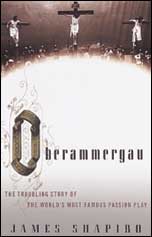
In
Oberammergau: The Troubling Story of the World's Most Famous
Passion Play (Pantheon Books, $24), Professor of English and
Comparative Literature James Shapiro '77 examines the
contradictory forces that have shaped the play over the centuries.
Shapiro, who is author of Shakespeare and the Jews (1996)
and a self-described student of the "interplay of art and
anti-Semitism," reconstructs the play's genesis, analyzes Catholic
and Jewish reactions to the spectacle, and describes the infighting
between traditionalists and reformers for the play's millennial
version, which sought to purge its anti-Semitic elements. Despite
deep reservations about the final text adopted for this year's
performance, which is expected to draw 500,000 visitors to
Oberammergau, Shapiro rejects censorship as a solution: "Theater,"
he writes, "remains one of the most powerful ways of changing the
way people think."
|
| 1 | 2 | 3 | 4 | |
|
|
|
|