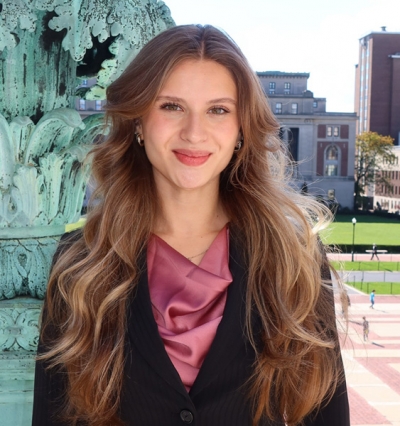
PHOTOGRAPHS COURTESY REBECA LOPEZ-ANZURES CC’27
“It’s a testament to the work that everyone has put in, and it’s very impressive,” she says. “I’m proud to lead the team in its current state.”
Lopez-Anzures, who is majoring in political science and human rights, was a “mocker” in high school and has been involved in CUMT since her first year at the College. In each round of a competition, teams present a case — released by the governing body at the beginning of the academic year — as either the defense or prosecution. Team members play attorneys and witnesses based on affidavits and other information, and must present their arguments more coherently and cohesively than their opponent. Competitions are typically four rounds spread over two days, so each team takes on the role of the defense and prosecution twice during the weekend.
Having prior mock trial knowledge can be helpful, but part of Lopez-Anzures’ mission as president has been to recruit people without experience. Having members with a variety of majors and backgrounds allows the team to benefit from a diverse set of skills and life experiences, making the group stronger.
“We have members of our team for whom their first exposure to mock trial was trying out on a whim,” Lopez-Anzures says. “And they’re some of our most successful competitors.”
Along with her administrative duties, she’s studying for the LSAT and balancing her academics with 7–15 hours of mock trial practice a week. She notes that everyone on the team, especially her fellow e-board members and the team captains, are “110 percent committed” and go above and beyond.
Lopez-Anzures shared a look at what a meticulously scheduled first day of a competition looks like.
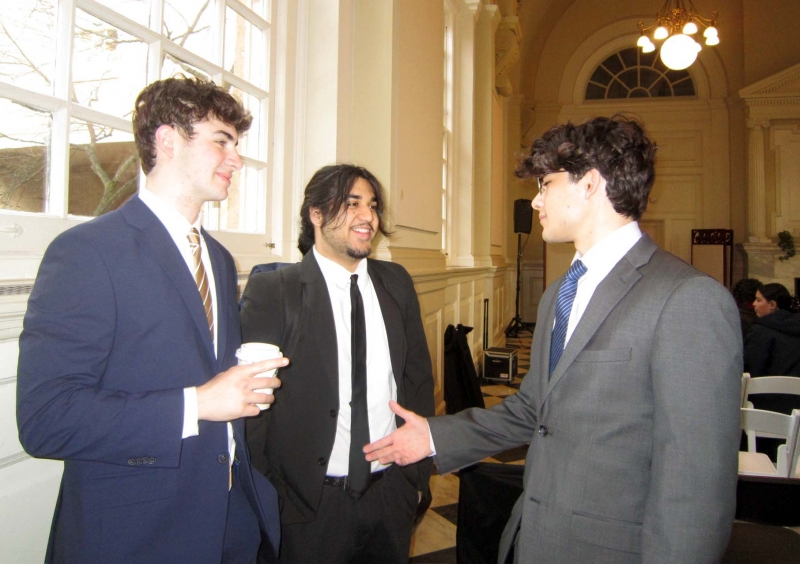
Mornings
“We all meet in the hotel lobby by 7:15 a.m. We’ll Uber to the tournament and then the captains will do team check-in. And then we’ll have opening ceremonies, where we find out whom we’re going up against. We’ll have a captains meeting and figure out what the trial will look like, fill out all the forms and figure out which witnesses to call. Round one begins at 9:00 a.m., and each round typically lasts three hours.”
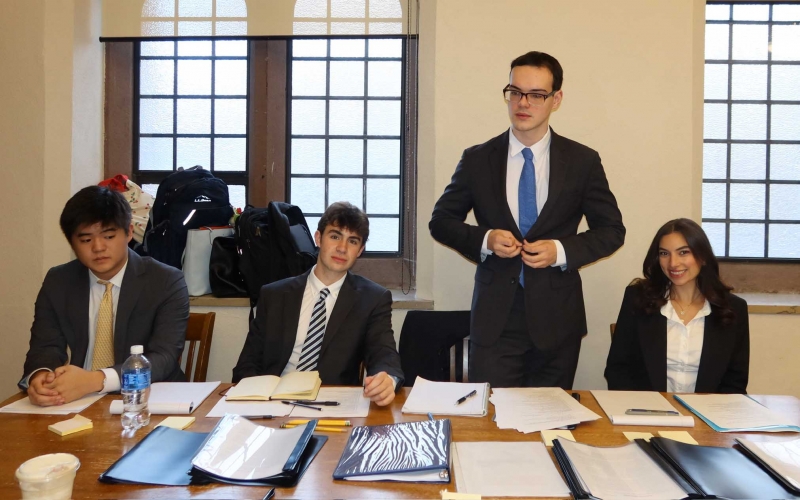
Afternoons
“After round one we’ll get lunch. My favorite part of the day is the organic team interaction during meals. Competing and getting your adrenaline rushing is fun, but at the end of the day, it’s a fake trial. No one is going to jail, no one actually died; it’s an extracurricular that we all fully engage in. Being in a trial and then being able to laugh about it after it’s over with everyone and just exhale — it reminds you why you do this. After lunch everything repeats; we’ll have the second captains meeting and then round two begins around 2:00 p.m.”
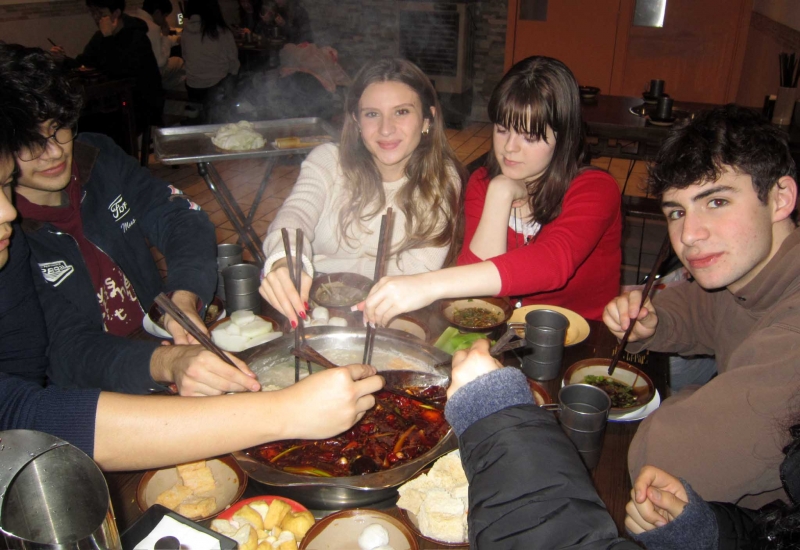
Evenings
“After the last round of the day we’ll go back to the hotel, change and unwind for about 30 minutes. Then we’ll have a team dinner and debrief what went well and what didn’t, and fix things for the next day. We can see the ballots after each round during spring tournaments, so we’ll know if we won or lost and by how much. We’re able to make on-the-spot adjustments. And then we do everything again on Sunday.”