David Prize winner Colby X. King ’22 is helping LGBTQ+ youth pursue careers in the arts.
Columbia College | Columbia University in the City of New York
David Prize winner Colby X. King ’22 is helping LGBTQ+ youth pursue careers in the arts.
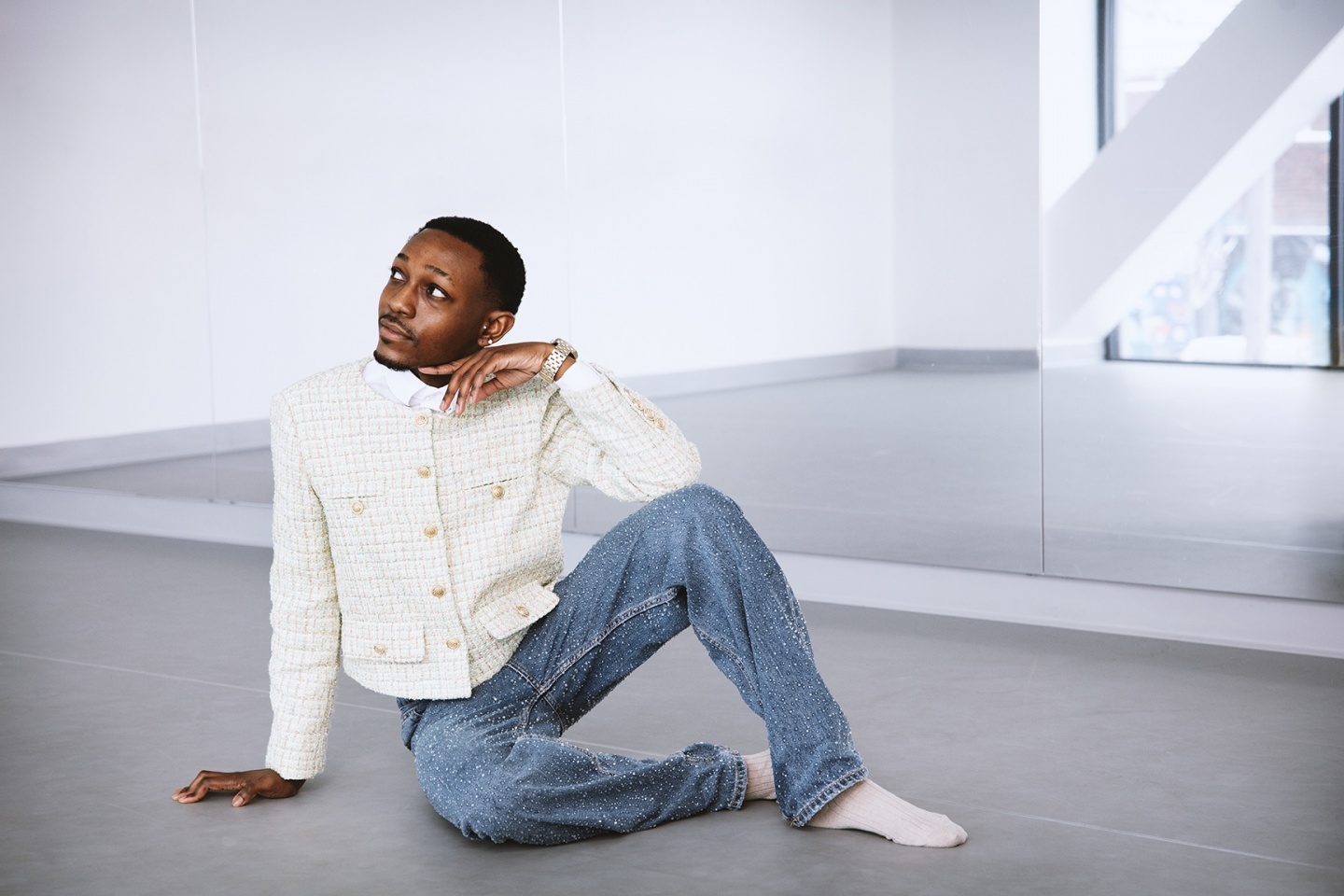
JÖRG MEYER
C
olby X. King ’22 got into seven of the eight Ivies, along with MIT and Stanford — but it was his Columbia College acceptance letter that got his heart racing. In New York City, the birthplace of the modern gay rights movement, he knew he would find a community of other queer Black people, after living a closeted life in his hometown of Dallas, Texas.
The Big Apple did not disappoint. In his senior year, King was invited to a Kiki house, a space where LGBTQ+ youth of color could find shelter and support, while also training to take part in ballroom events like voguing, walking the runway and elaborate costume design. It was a revelation: Here were young people who could fully express who they were, surrounded by a surrogate family. “Ballroom is joy,” King says. “It’s where so many Black and brown people do more than survive. They thrive.”
When King graduated and landed a job at American Express, he observed that many of his friends in Kiki houses struggled to make the leap to the professional world. He’s made it his mission to help. Last year — at just 25 — King co-founded the Kiki Arts Collaborative (KAC), an organization that equips young people in the ballroom scene with practical skills to pursue careers in the arts. For this work, he recently won the prestigious David Prize, a $200,000 award given to five New Yorkers who are solving some of the city’s greatest challenges. The KAC allows King to formalize what he has been doing informally for years: helping queer artists of color find opportunities, access funding and translate their artistic brilliance into sustainable creative careers.
For King, the KAC is the culmination of years of academic study about what it means to be Black and queer in America. In high school, he had set out to become an engineer, but once he arrived at Columbia Engineering, he realized he had an opportunity to learn about many other things that were important to him. “Columbia felt like the right place for me to explore both engineering and everything beyond engineering,” he recalls. “I wanted to understand more about how race, religion and sexuality interact.”
In his freshman year, he took Professor (now College dean) Josef Sorett’s “Black Memoir” class. Reading other people’s stories, King began to better understand how deeply the Black church had shaped his experience of the world. His mother, a minister, showed him the value of a life of service. The church was also King’s first exposure to the arts, introducing him to music and dance. But he was troubled by the church’s treatment of LGBTQ+ people and women, including his mother, who was not allowed to take on senior leadership roles there. “The class gave me a way to process my experience,” he says. “But there was so much more I wanted to know.” King asked Sorett to write him a recommendation letter to transfer to the College, where he went on to major in African American studies with a concentration in psychology.
Outside the classroom, King found other ways to explore his identity. He joined the Black Students Organization, the Intercultural Resource Center and the Student Council. But it was at balls off campus that he felt his strongest sense of belonging. King was interested in the roots of the ballroom scene, which go all the way back to the mid-19th century. Formerly enslaved Black people threw drag balls, which eventually evolved into the legendary Harlem balls of the 1920s. In the ’60s and ’70s the ballroom houses became a site of resistance to homophobia and transphobia; during the AIDS crisis, they were a crucial place for Black and brown LGBTQ+ people to access testing and treatment.
In the 2000s, a new subculture of ballroom emerged, focused on LBGTQ+ youth. It centered around Kiki houses, where young people who were ostracized or expelled from their families of origin could live in a community. (“Kiki” is slang for a social gathering where friends hang out in a relaxed environment.) Older members guided younger ones, creating surrogate bonds. The houses offer healthcare, emotional support and a sense of family pride, but are also meant to be a place of joy, exemplified by Kiki balls, which allow members to train for bigger events held at other houses.
Different houses compete against one another; participants can win cash prizes and trophies across categories, like dance, fashion and runway walks. King himself joined the House of Louboutin (named for the famous shoe designer), and participates in the “male figure face” category for cisgender men. “Trans women are the forebears of this community, but ballroom has expanded to include a wider range of identities,” he says. “I put on nice suits and walk the runway.”
Even as King was embraced by the ballroom community, he also realized he had a lot of privilege entering his 20s with an Ivy League degree. While the College’s career counselors helped him get internships and do informational interviews with alumni, many young people don’t have the resources to attend college, much less climb the career ladder. “LGBTQ+ people face day-to-day discrimination when it comes to getting jobs,” he says. “It’s even worse for people of color.”
During the past three years, King has offered the Kiki community as much support as he can. He’s invited people to paid speaking engagements at American Express and to be on Sacred Spaces, a podcast supported by Columbia’s Heyman Center for the Humanities. He’s reviewed resumes and helped write artist statements and create portfolios. And it has become clear to King that the Kiki scene helps young people hone valuable skills in storytelling, leadership, design and performance.
“Ballroom is a form of artistic practice,” he says. “But people both inside and outside the community don’t see their experience as valid. I’m trying to help them position their experience in the right way so it can be translated into career opportunities.”
Earlier this year, King decided to formalize this work by co-founding the KAC with his friend Asmara Pierre-Louis, who graduated from Harvard in 2022. With the help of grants, the KAC is establishing residencies, fellowships, exhibitions and public programs that will give young LGBTQ+ artists a chance to show their work. As members of the collaborative build portfolios and learn how to present themselves professionally, the goal is for them to find work in cultural institutions, the media or marketing.
Winning the David Prize was a full circle moment for King. His mother, along with other family members, flew up from Dallas to see him accept the award. “They were excited to be there and are proud of the work I’m doing,” King says. One day, he hopes to bring the KAC to the hometown that shaped him in so many ways. “This model can be replicated in any city that has cultural organizations,” he says. “My goal was always to go back to Texas.”
Elizabeth Segran ’05 is a senior staff writer at Fast Company magazine, where she covers the fashion industry. She is the author of The Rocket Years: How Your Twenties Launch The Rest of Your Life. Segran lives in Boston with her husband, Benjamin Schneer ’05, whom she met freshman year, and their two daughters.

Published three times a year by Columbia College for alumni, students, faculty, parents and friends.
Columbia Alumni Center
622 W. 113th St., MC 4530, 6th Fl.
New York, NY 10025
212-851-7852
cct@columbia.edu

Columbia Alumni Center
622 W. 113th St., MC 4530, 4th Fl.
New York, NY 10025
212-851-7488
ccalumni@columbia.edu