 |
 |
 |
 |
 |
|||
|
ALUMNI PROFILE
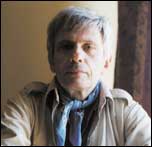
After teaching writing and film for many years and authoring more than 30 books, Jerome Charyn '59 has combined his literary and leisure pursuits with a book about ping-pong, Sizzling Chops & Devilish Spins: Ping-Pong and the Art of Staying Alive (Four Walls Eight Windows, 2001). Despite modern-day visions of a hollow white ball being batted around in rec rooms and dorm basements, ping-pong — or table tennis, as it is more formally known — was once a thriving sport in the United States and still, Charyn explains, has an underground following of devotees. Charyn, who divides his time between New York and Paris, is ranked in the top 10 percent of French pongistes. CCT: How did you get going in ping-pong? Charyn: I played as a kid, and then, in the '60s and '70s, I played at Marty Reisman's club on Riverside Drive at 96th Street. It was very popular. Bobby Fischer played there, and Dustin Hoffman and Kurt Vonnegut. But I didn't have a trainer, and you can't really learn how to play without a trainer. CCT: What's the attraction of ping-pong? Charyn: It's like an addiction. If you play and play well, there's nothing like it in the world. You need total concentration or you can't play. And you fall into a rhythm. It's incredibly restful, even as you grow tired. CCT: Where does one play ping-pong now? Charyn: Every university has a club, including Columbia. It's the second most popular sport in China, and in Asia it's as popular as baseball or football are here. But there are only 7,000 registered players in the United States — there are more registered players in France. In France, I play on a team and work with a trainer two or three times a week. [In New York, the only venue used exclusively for ping-pong is the Manhattan Table Tennis Club on Broadway at 100th Street, were classes and tournaments are held. Enthusiasts also play at pool halls that have ping-pong tables.] CCT: How has the game changed from its heyday? Charyn: In the '30s and '40s, there was league play and intercity play. Tournaments were held in Madison Square Garden — that's how popular it was. It was a novelty sport. Ginger Rogers and Fred Astaire were ping-pong players, although they weren't trained. A club called Lawrence's, on Broadway and 53rd Street, was the capital of the sport. That's where all of the champs played. It was like having an Olympic team all in one spot. Then, in the '50s, the game changed when the sponge racquet came in. The American players didn't enjoy it. It was a combination of that and television. Television killed it, just as it killed vaudeville and killed all of the novelty sports. People stayed home. The game you see in most basements is not how the game is really played. Among trained players, it's all about the serve. The new racquet is so scientific, it's so dependent on technology and structure. I have a special racquet, a sponge racquet with pimples on the outside. It has two sides — one for offense and one for defense — and I picked the skins for the faces. It's very hard to control and very hard to play against. It works like a catapult and sends your missiles back to you. If you tried to play with my racquet, you probably wouldn't be able to hit the ball. CCT: Is ping-pong underground? Charyn: Yes, it's akin to the chess culture. It has its own exotica. Among serious players, it's a beloved game.
|
|
|||||||||||||||||||||||||||||||||||||||||||||||