Columbia College Columbia College
Columbia University in the City of New York
students faculty & administration alumni parents prospective students about columbia college
Low Library
Columbia College
The Core Curriculum Home
Contemporary Civilization
Literature Humanities Syllabus
Art Humanities
Music Humanities Syllabus
Frontiers of Science
Foreign Language
Major Cultures
Physical Education
Science
University Writing
Registration
Committee on the Core
Awards
Lectures
News
FAQs
Oasis of Order: A History of the Core
Contact

The Core Curriculum

The Center for the Core Curriculum
202 Hamilton Hall; 854-2453
URL: http://www.college.columbia.edu/core/


Committee on the Core Curriculum

Holger Klein
Art History and Archaeology
Chair of Art Humanities
903 Schermerhorn Hall; 854-4505
hak56@columbia.edu

Niocle Wallack
English and Comparative Literature
Acting Director of the Undergraduate Writing Program
310 Philosophy; 854-3886
nw2108@columbia.edu

Elaine Sisman
Music
Chair of Music Humanities
604 Dodge; 854-7728
es53@columbia.edu

Patricia Grieve
Spanish and Portuguese
Chair of the Committee on the Core;
Chair of the Committee on Major Cultures;
305 Casa Hispanica; 854-4338
peg1@columbia.edu

James Valentini
Chemistry
Chair of the Committee on Science Instruction
528 Havemeyer; 854-7590
jjv1@columbia.edu


Roosevelt Montas
Associate Dean of the Core Curriculum
202 Hamilton; 854-2453
rm63@columbia.edu

Michael Stanislawski
History
Chair of Contemporary Civilization
605 Fayerweather Hall; 854-2482
mfs3@columbia.edu

Gareth Williams
Classics
Chair of Literature Humanities
615 Hamilton Hall; 854-2850
gdw5@columbia.edu

Austin Quigley
Dean of Columbia College
208 Hamilton; 854-2443
aeq1@columbia.edu

Kathryn Yatrakis
Dean of Academic Affairs
208 Hamilton; 854-2441
kby1@columbia.edu

The Core Curriculum is the cornerstone of a Columbia education. Central to the intellectual mission of the Core is the goal of providing all Columbia students, regardless of their major or concentration, with wide-ranging perspectives on significant ideas and achievements in literature, philosophy, history, music, art, and science.

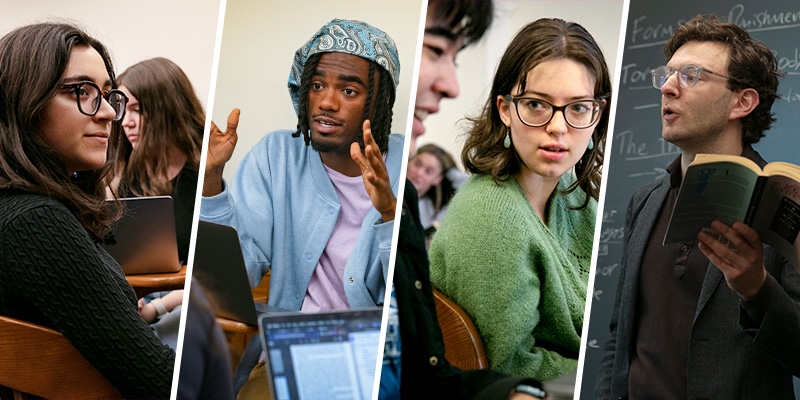
Contemporary Civilization began in 1919 as a course on War and Peace Issues, and the creation of Literature Humanities followed in 1937. By 1947 Art Humanities and Music Humanities had been added, and a new course in Asian Humanities was introduced. The global core requirement, formerly major cultures, joined the Core in 1990 and Frontiers of Science in 2004. Though celebrated for their content, these courses are equally important for their small class format. Taught in seminars limited to approximately twenty-two students, these courses ensure that education at Columbia begins with an emphasis on active intellectual engagement. The small size of most Core Curriculum classes provides students with the opportunity to develop intellectual relationships with faculty early on in their College career and to participate with them in a shared process of intellectual inquiry. In the Core Curriculum the pur-suit of better questions is every bit as important as the pursuit of better answers.

The skills and habits honed by the Core—observation, analysis, argument, imaginative comparison, respect for ideas, nuances, and differences—provide a rigorous preparation for life as an intelligent citizen in today’s complex and changing world.

Upcoming Events

CC Reader

Instructors' Resources


Upcoming Events

Core Curriculum
Course Listings

logo: Student Services On-Line

Course Works
logo: Student Services On-Line

Bulletin of Courses
& Directory of Classes

Frontiers of Science,
The Science Core Curriculum
Frontiers of Science

African Civilizations
Detail from Catalan Atlas

Oasis of Order:
A History of the Core

Virtual Reading Room

Student Services On-line
logo: Student Services On-Line
Account Details,
Degree Audit Reports, Grades, Registration, Transcripts, & More!

Advising Resources @ Columbia
logo: Advising Resources @ Columbia

contact us privacy policy terms of use search